
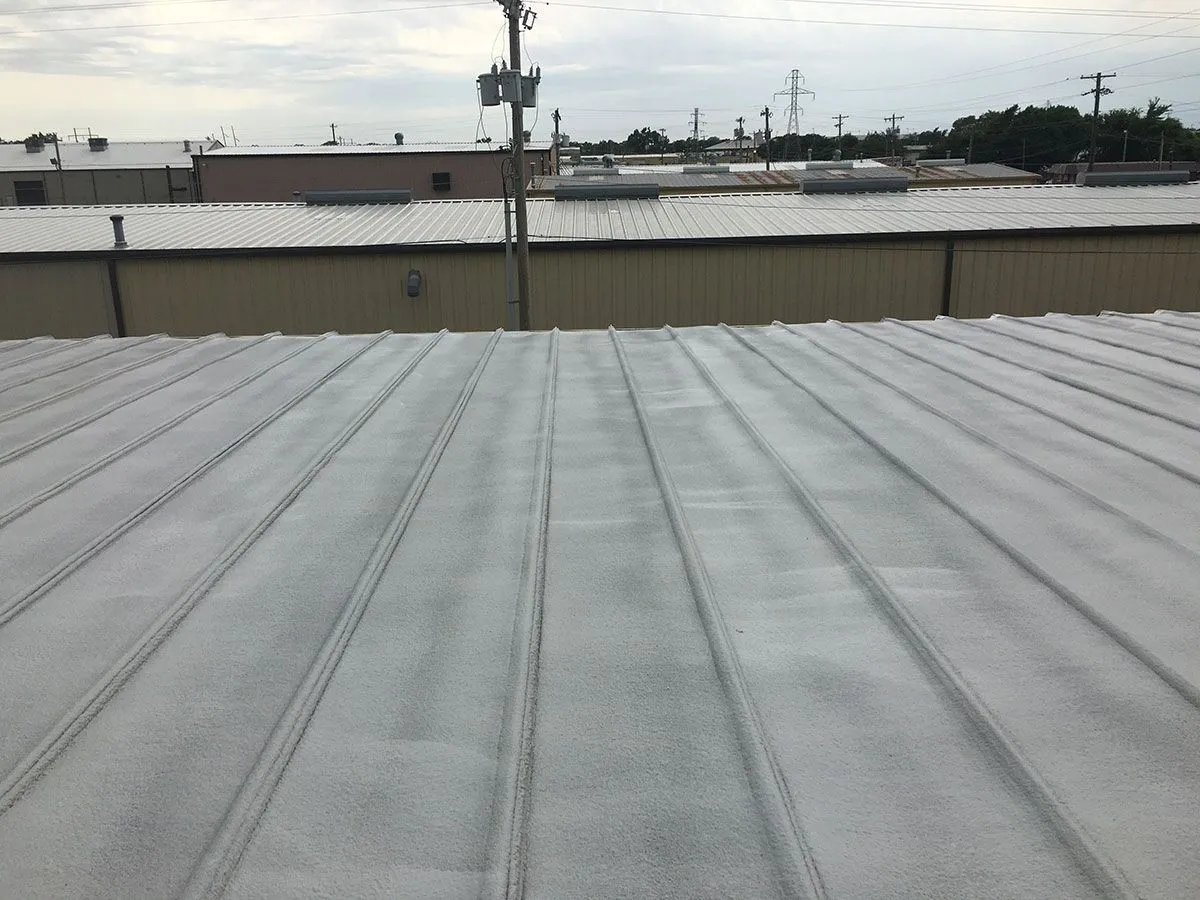
Roof-level insurance documentation: photos, measurements, moisture readings, and a written scope for the claim.
Most requests for insurance documentation support come in after the damage is already done and the claim conversation has started: a tenant reports a leak, a property manager needs a file for the carrier, or an adjuster's first estimate looks short next to what the roof crew can see standing on it. Our job at that point is narrow and specific - build the field record the claim needs, in a format an adjuster or public adjuster can use, without stepping into the parts of the process that belong to the owner and the insurance company.
A useful insurance documentation package starts on the roof, not at a desk. We photograph every damaged area from multiple angles, record measurements of the affected sections, and take moisture readings wherever saturation is suspected under an intact-looking membrane. Deck condition, drain and scupper performance, parapet and coping condition, flashing at penetrations, and any interior water travel that traces back to a specific roof area all get logged the same way, with timestamps, so the file holds up as a record rather than a summary written from memory later.
San Francisco's older commercial buildings make that field-first approach worth the extra time. A built-up roof on a pre-war structure in North Beach or the Financial District can carry decades of fog-belt moisture cycling that only shows up as a soft spot or a slow stain, not an obvious tear. A converted industrial building in SOMA or Dogpatch may have rooftop equipment, solar arrays, or tenant improvements layered onto an older assembly in ways that complicate where the damage actually starts. Photographs and moisture readings settle those questions instead of leaving them to an estimate written from the ground.
Once the roof walk is done, we organize the findings into a written scope: what's damaged, what caused it, and what it will take to repair correctly, including any code-required upgrades or matching requirements a partial repair would trigger. We separate storm-related or sudden damage from ordinary wear, since carriers generally treat the two differently, and we note where a repair can't reasonably stop at the visibly damaged section because of how the roof assembly ties together. That written file is what goes to the adjuster, and it's also what we bring to the roof when we meet the adjuster in person.
We're your roofing contractor, not a public adjuster - we document and substantiate the roof damage so you and your adjuster work from an accurate scope. We don't file the claim, negotiate with the carrier, or promise a specific payout; those decisions belong to the owner and the insurance company, or to a licensed public adjuster if one is retained.
Commercial property coverage in California has gotten harder to place in the last few years, with some carriers pulling back from wildfire-exposed regions statewide and others tightening underwriting on older buildings generally. San Francisco itself carries relatively low wildfire risk compared to the North Bay and East Bay hill communities in our service area, but the broader market pressure has made carriers more careful across the board, including on commercial roof claims. A thin claim file with a vague damage description is more likely to come back with items excluded or the payout reduced under actual-cash-value depreciation than a file with dated photos, measurements, and a clear cause.
Questions building owners ask
What is included in a roof insurance documentation package?
Timestamped photos of every damaged area, measurements, moisture readings where saturation is suspected, a written condition summary, and an itemized scope that separates storm-caused damage from pre-existing wear.
Do you file the claim for us?
No. We document and substantiate the roof damage; filing the claim and negotiating with the carrier is between the owner and the insurance company, or a public adjuster if one is retained.
How soon after damage occurs should documentation start?
As soon as it's safe to access the roof. Conditions like lifted seams or scattered debris can change quickly, and documentation close to the event date keeps the record tied to the actual cause.
Can this documentation be used if the claim is later disputed?
Yes. A dated, photo- and measurement-backed file is exactly what's useful if a claim comes back denied or underpaid and needs to be revisited with the carrier.
Request A Roof Scope
Send the building location, roof concern, and access notes. We will respond with the next practical step.