
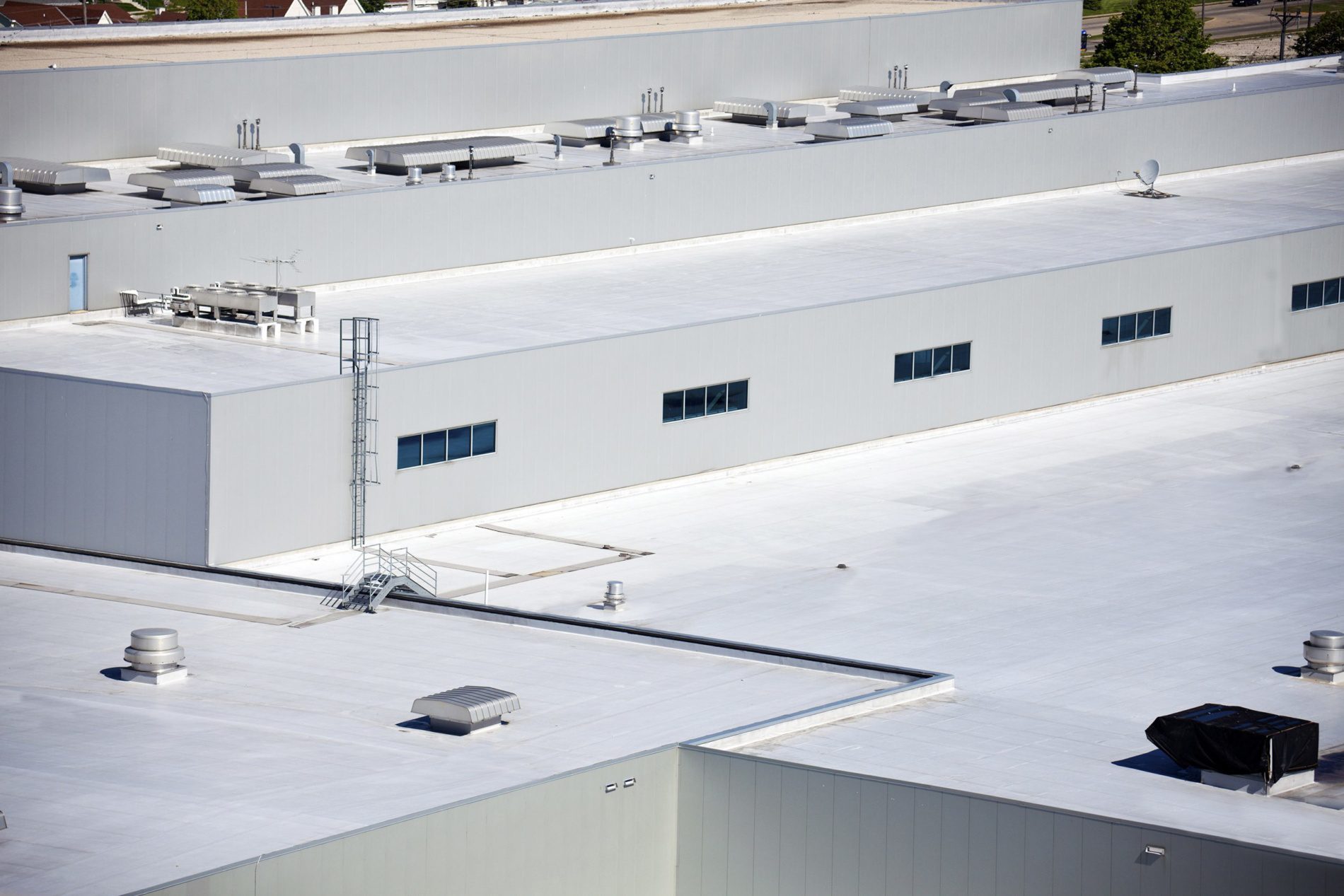
Commercial roof scope, inspection, access planning, and documentation for acrylic roof coatings.
San Francisco's advanced manufacturing base is concentrated in the biotech and life sciences sector, with companies like Genentech's South San Francisco campus-one of the birthplaces of the modern biotechnology industry-anchoring a cluster of biologics manufacturers, gene therapy developers, and precision medical device producers stretching from the Mission Bay biotech hub through Brisbane and South San Francisco. Genentech's campus alone encompasses millions of square feet of manufacturing, laboratory, and support space where commercial roofing systems must address pharmaceutical process chemistry, cleanroom vibration, and the Bay Area's distinctive seismic and coastal environment simultaneously.
Biologics manufacturing at Genentech and its peer companies uses mammalian cell culture bioreactors, chromatography suites, viral inactivation areas, and fill-finish cleanrooms-each generating distinct exhaust chemistry. Clean-in-place (CIP) chemical exhaust carries sodium hydroxide, phosphoric acid, and cleaning agent vapors. Viral inactivation areas use low-pH citrate buffers and other acidic compounds. These varied chemical streams exit through rooftop scrubbers and ventilation exhausters at multiple locations across the building footprint. A thorough rooftop chemical exposure assessment-mapping exhaust stack locations, plume directions under prevailing southwest winds, and chemical identities-is the essential first step in specifying any roofing system for a San Francisco biotech manufacturing facility.
Vibration from Bay Area biotech facilities is significant and complex. High-speed centrifuges, lyophilizers, and large HVAC systems serving positive-pressure cleanrooms generate persistent cyclic vibration. South San Francisco's manufacturing buildings include both modern engineered steel structures on deep foundation systems and mid-century reinforced concrete buildings with varying deck conditions. All require fully adhered membrane systems above manufacturing floors. Mechanical attachment is reserved for warehouse and utility support areas with lower vibration profiles.
San Francisco's seismic environment is among the most demanding in the United States. The San Andreas Fault, the Hayward Fault, and the network of secondary faults in the Bay Area create seismic design requirements that directly influence roofing system selection. Fully adhered membranes that move with the building deck are the only appropriate choice for manufacturing buildings in this seismic environment. Penetration collars must accommodate inter-story drift without tearing, and expansion joint covers should be verified for the specific design drift values established in the building's structural engineering documentation.
Marine-influenced climate adds a fourth challenge layer at San Francisco manufacturing sites. The Bay Area's persistent marine fog deposits salt aerosol on rooftop surfaces throughout the year-not just in summer. Metal flashings, fasteners, and equipment curbs in South San Francisco's industrial corridor corrode faster than the same components in inland California locations. Stainless steel fasteners, anodized or painted aluminum flashings, and marine-grade sealants are baseline specifications for roofing on Bay Area biotech manufacturing buildings within ten miles of the bay shoreline.
California's DSA requirements do not apply to private biotech manufacturing buildings, but OSHPD standards are relevant for any portions of the facility that provide patient care or clinical research services. More broadly applicable is California Title 24, which mandates minimum cool-roof performance for any re-roofing project covering more than 50% of the existing roof. San Francisco's overcast conditions reduce the energy payback on cool roofing compared to Southern California, but Title 24 compliance is mandatory regardless of projected energy savings.
Skylights are used on support buildings, lobby structures, and research amenity spaces in South San Francisco's biotech campus developments. The Bay Area's diffuse natural light quality makes skylights both aesthetically effective and practical from an energy standpoint. Annual inspection of skylight curb sealants is particularly important in the fog belt's persistent moisture environment, where sealant compression cycling occurs year-round rather than only during dry-to-wet seasonal transitions.
PG&E's commercial energy efficiency incentive programs provide rebates for qualifying cool-roof installations on commercial and industrial buildings in their service territory. South San Francisco biotech manufacturers can typically qualify for per-square-foot rebates that offset a portion of the premium cost of high-SRI membrane systems. Contractors should integrate PG&E rebate documentation into project close-out deliverables.
Engage a California C-39 Roofing Contractor with manufacturer system authorization, documented experience on South San Francisco or Mission Bay biotech manufacturing facilities, and demonstrated capability in Bay Area seismic roofing design, coastal corrosion protection, and California Title 24 compliance documentation.
Request A Roof Scope
Send the building location, roof concern, and access notes. We will respond with the next practical step.
Related Pages
Questions About Manufacturing Facility Roofing
What changes the scope?
Access, wet insulation, deck repairs, edge metal, drain work, occupied-building constraints, disposal, and code documentation can all change the final path.
Can the building stay occupied?
Often, yes. The scope still needs rules for loading, noise, odors, tenant notices, daily dry-in, and emergency contact responsibilities.
When is coating realistic?
A coating is realistic only when the roof is dry, cleanable, compatible, properly detailed, and still structurally sound.
What should ownership receive?
A usable roof file should include photos, observed conditions, assumptions, near-term repairs, capital triggers, and the recommended next step.