
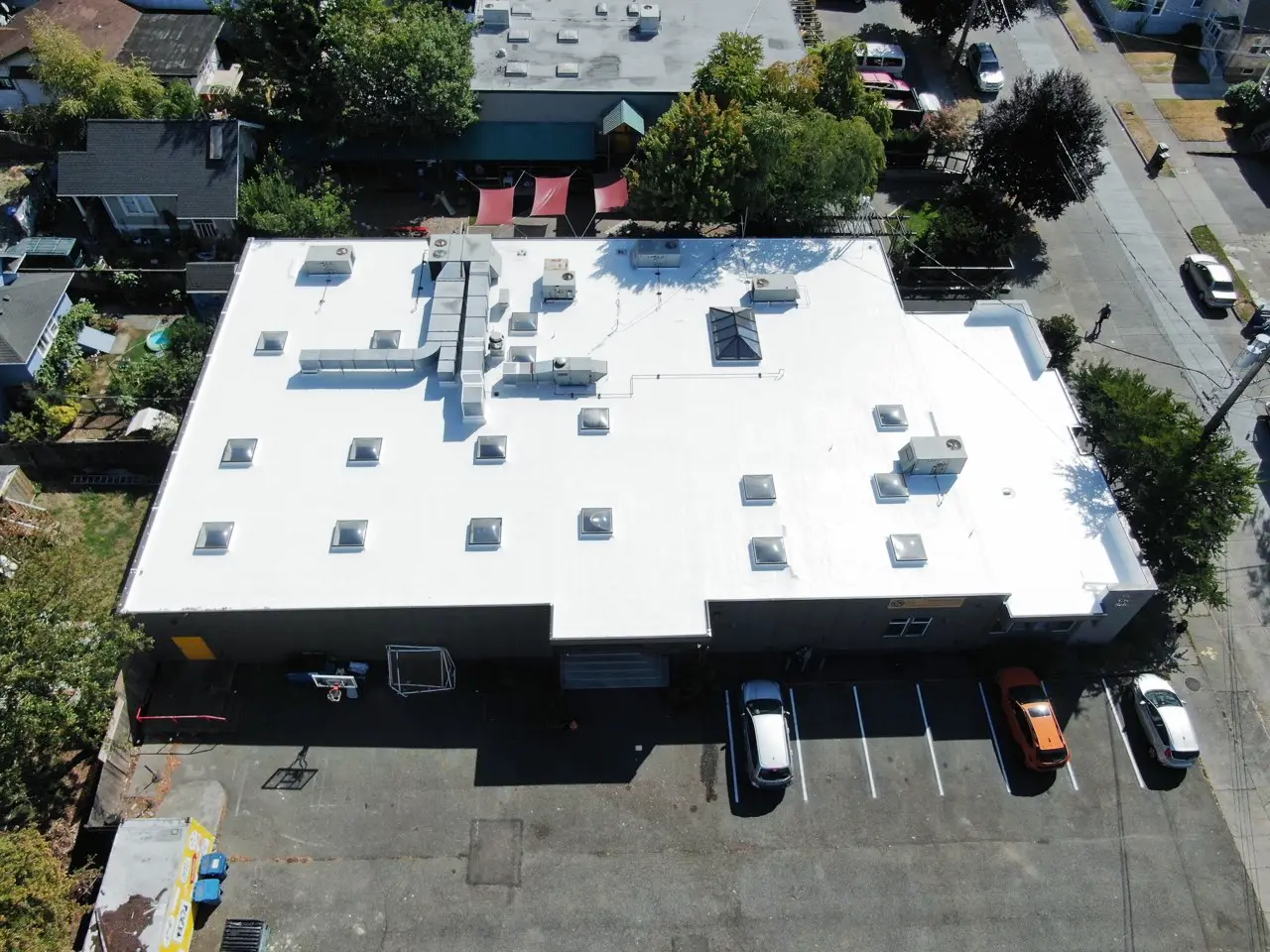
Commercial roof scope, inspection, access planning, and documentation for acrylic roof coatings.
San Francisco Unified School District, serving approximately 50,000 students across more than 130 school buildings in one of the nation's most expensive and regulated construction markets, manages its capital facilities under California's full suite of public school construction requirements - Division of the State Architect oversight, prevailing wage compliance, Title 24 energy standards, and multiple California environmental review requirements - alongside San Francisco's own exceptional local requirements: historic preservation review for the district's many landmark school buildings, green building standards that exceed state minimums, and seismic requirements reflecting the Bay Area's position adjacent to the Hayward and San Andreas faults.
San Francisco's seismic environment is among the most demanding in the country for school construction. The Bay Area experienced the catastrophic 1906 earthquake and the Loma Prieta earthquake in 1989, and geologists broadly agree that a major seismic event on the Hayward or San Andreas fault within the next 30 years is a high-probability scenario. California's essential facility seismic requirements for school buildings are applied with particular rigor in San Francisco, and the DSA review process for SF Unified school projects scrutinizes seismic detailing - including rooftop equipment anchorage, parapet connection flexibility, and structural continuity - with a thoroughness that reflects the severity of the Bay Area's seismic risk.
California prevailing wage law applies to all San Francisco Unified roofing projects as public works construction, and San Francisco County's prevailing wage rates - set by the DIR and reflecting the Bay Area's extraordinarily high construction labor market - are among the highest in California. Roofing work in San Francisco commands prevailing wage rates well above what comparable work costs in Sacramento or the Inland Empire, and budget expectations for SF Unified roofing projects must reflect these market realities. Certified payroll record submission, DIR online reporting, and labor compliance monitoring are administrative requirements that contractors must be fully prepared to manage before beginning work on any San Francisco Unified project.
California Title 24 energy standards apply to SF Unified roofing replacement projects, but San Francisco's own green building requirements - codified in the San Francisco Green Building Code - go further, requiring LEED Silver or higher certification for large capital projects. Roofing system contributions to LEED scoring include Energy and Atmosphere credits for cool-roof SRI performance, Sustainable Sites credits for stormwater management through vegetative roofing or detention, and Materials and Resources credits for recycled content and regional material sourcing. Contractors who are unfamiliar with LEED documentation requirements will struggle to provide the product data that these credits require.
San Francisco Unified's school building portfolio includes a substantial number of historically significant structures - from the Beaux Arts buildings of the early twentieth century to the Works Progress Administration-era schools of the 1930s - that are listed on the San Francisco Landmark register or located in the city's historic districts. Exterior work on these buildings requires review by the San Francisco Historic Preservation Commission, and the review timeline must be factored into project planning well before permit applications are submitted. The commission evaluates visible materials and profiles, and replacement roofing must be historically compatible with the building's designation.
Summer scheduling for San Francisco Unified benefits from the Bay Area's dry summer season, but San Francisco's microclimatic variability - the fog that rolls in from the Pacific Ocean throughout the summer - creates conditions that are wetter than inland California markets even during the nominal dry season. Contractors working on SF Unified projects in the summer should expect frequent morning fog that delays early starts, and dew or light coastal moisture that requires temporary waterproofing materials to be secured each evening. These conditions are manageable but require a greater attention to daily weather monitoring and temporary protection protocols than a Sacramento or Riverside summer project demands.
San Francisco Unified's bond program - funded through multiple Propositions A and 39 bond measures that SF voters have approved - is subject to independent citizens' oversight committee review and annual financial audits. Bond program accountability requirements mean that all funded project documentation must be organized and maintained for the full audit period, and project managers must be prepared to respond to oversight committee inquiries about project scope, cost, and completion status. The documentation discipline that bond program accountability demands is also good project management practice that serves the district's facility management needs regardless of the oversight context.
DSA-required special inspections for SF Unified school projects involve DSA-certified inspectors observing critical installation activities - insulation attachment, membrane fastening, flashing installation - and documenting compliance with the DSA-approved plans. Given the enhanced seismic design requirements applicable to San Francisco school buildings, the special inspection program for SF Unified projects should be particularly rigorous in documenting equipment curb anchorage installation and parapet connection flashing details. These elements are the most seismically critical rooftop assembly components and the ones that most directly affect life-safety performance in a seismic event.
The combination of San Francisco's high labor costs, complex regulatory environment, seismic requirements, historic preservation review, and green building standards makes school roofing in this market genuinely among the most complex and expensive commercial roofing work in the country. Contractors who develop genuine expertise in this market - who invest in understanding DSA processes, prevailing wage compliance, LEED documentation, and San Francisco historic preservation - create a meaningful competitive advantage that protects their market position from less capable competitors. SF Unified deserves contractors who are up to the complexity that its schools demand.
Request A Roof Scope
Send the building location, roof concern, and access notes. We will respond with the next practical step.
Related Pages
Questions About School and K-12 Educational Building Roofing
What changes the scope?
Access, wet insulation, deck repairs, edge metal, drain work, occupied-building constraints, disposal, and code documentation can all change the final path.
Can the building stay occupied?
Often, yes. The scope still needs rules for loading, noise, odors, tenant notices, daily dry-in, and emergency contact responsibilities.
When is coating realistic?
A coating is realistic only when the roof is dry, cleanable, compatible, properly detailed, and still structurally sound.
What should ownership receive?
A usable roof file should include photos, observed conditions, assumptions, near-term repairs, capital triggers, and the recommended next step.