
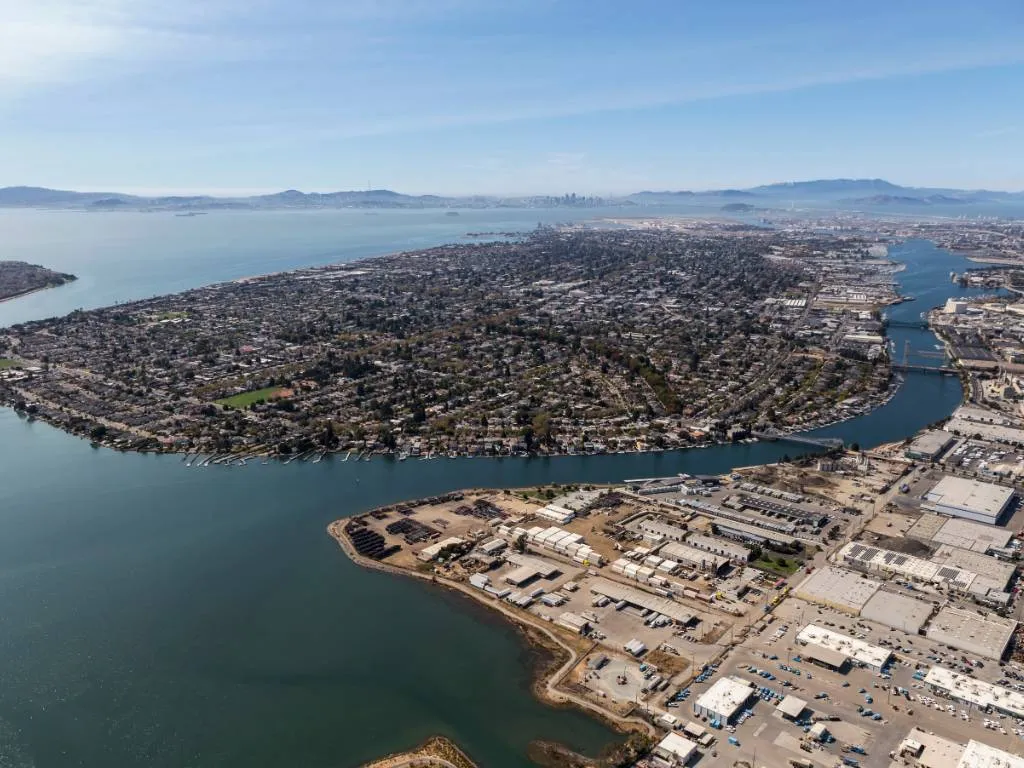
Documentation and adjuster coordination for roof damage caused by Pacific storm systems and atmospheric river wind events.
San Francisco doesn't get hail or hurricanes, but it gets something that does just as much damage to a commercial roof: winter Pacific storm systems and atmospheric river events that stack sustained wind on top of heavy, sideways rain for days at a time. On an exposed hill site or a waterfront building with open bay exposure, that combination finds the roof's weak points - loose coping, an under-sealed curb, a parapet detail that's been patched one too many times - faster than a slow summer drizzle ever would. When that damage turns into an insurance claim, the wind and the water both need to be documented, because carriers often treat them differently.
The city's storm season runs mostly through the winter months, when systems come off the Pacific in bands and, in the wetter years, an atmospheric river parks over the Bay Area for a stretch of days. The wind that comes with those systems isn't hurricane-force, but it's sustained, and it changes direction as the front passes, which stresses roof edges and terminations from more than one side. Buildings on higher ground - around Twin Peaks-facing slopes, Bernal Heights, or the ridgelines above the Mission - take a more direct hit than buildings tucked into the lower flats. Waterfront-facing property near the Embarcadero, Mission Bay, or the Central Waterfront gets a different exposure: open water fetch with fewer buildings to break the wind before it reaches the roof.
Older gravel-surfaced built-up roofs, common on pre-war masonry buildings in North Beach and the Financial District, are particularly vulnerable to wind uplift at the perimeter once the gravel ballast has thinned or migrated over the years. Newer single-ply membrane roofs on converted SOMA and Mission Bay buildings handle wind load differently, but their attachment points at parapets, mechanical curbs, and roof-edge metal are still where a storm event does its damage first.
We inspect for the damage patterns that are specific to wind rather than general wear: lifted or torn membrane at the perimeter, displaced or bent coping and edge metal, fasteners backed out or sheared, torn flashing at curbs and penetrations, and any place where wind-driven rain pushed water past a seam or termination that would normally shed it. We photograph and measure each area, note wind direction where it's relevant to the damage pattern, and record interior water intrusion that ties back to a specific point on the roof. If insulation has taken on water, we note that separately, since saturated insulation affects the repair scope even where the membrane above it looks intact.
Timing matters here more than on some other claims. A lifted seam can get walked flat again, wind-scattered debris gets cleared by building maintenance, and rain that entered during the storm can keep migrating through the building for days afterward. We aim to get on the roof as close to the event as access allows, so the documentation reflects the storm itself rather than its aftermath a week later.
Once our documentation is complete, we meet the insurance adjuster on the roof and walk the same damage together, pointing to the specific wind-related failures we've recorded, tracing each one from the roof-level cause down to where it shows up inside the building. That distinction matters for how a claim gets classified and scoped. We also flag related items that a wind claim often needs: code-required upgrades to edge securement if current wind-uplift standards exceed what the existing roof was built to, and matching requirements where a partial repair would leave a visibly different membrane or metal profile next to undamaged sections.
We're your roofing contractor, not a public adjuster - we document and substantiate the wind and storm damage so you and your adjuster work from an accurate, complete scope. We don't negotiate the claim or promise a payout; we make sure the roof-level facts are on the record before the estimate is finalized.
Wind & storm claim questions we hear often
Does a Pacific storm or atmospheric river count as wind damage for a claim?
Often yes, when sustained wind or a documented gust event caused or contributed to the damage. These storms typically combine heavy rain with strong sustained wind, and separating the two without documentation tied to the event can be difficult.
How is wind damage different from ordinary roof wear?
Wind damage tends to concentrate at edges, terminations, and attachment points rather than spreading evenly across the roof field. We document the pattern itself, at the roof level, rather than only the resulting leak.
Why get on the roof quickly after a storm?
Evidence changes fast - lifted seams get walked flat, debris gets cleared, and rain intrusion keeps spreading through the building. Documentation close to the storm date keeps the claim tied to the actual event.
What parts of a San Francisco roof are most exposed to wind?
Parapet coping, edge metal, rooftop unit curbs, and older gravel-surfaced built-up roofs on hill-exposed or waterfront-facing buildings tend to take the most load.
Do you handle the insurance claim itself?
No. We document and substantiate the wind and storm damage; filing and negotiating the claim is between the owner and the insurance company, or a public adjuster if one is retained.
Request A Roof Scope
Send the building location, roof concern, and access notes. We will respond with the next practical step.
Related Pages
Questions About Wind & Storm Roof Insurance Claims in San Francisco
What changes the scope?
Access, wet insulation, deck repairs, edge metal, drain work, occupied-building constraints, disposal, and code documentation can all change the final path.
Can the building stay occupied?
Often, yes. The scope still needs rules for loading, noise, odors, tenant notices, daily dry-in, and emergency contact responsibilities.
When is coating realistic?
A coating is realistic only when the roof is dry, cleanable, compatible, properly detailed, and still structurally sound.
What should ownership receive?
A usable roof file should include photos, observed conditions, assumptions, near-term repairs, capital triggers, and the recommended next step.