
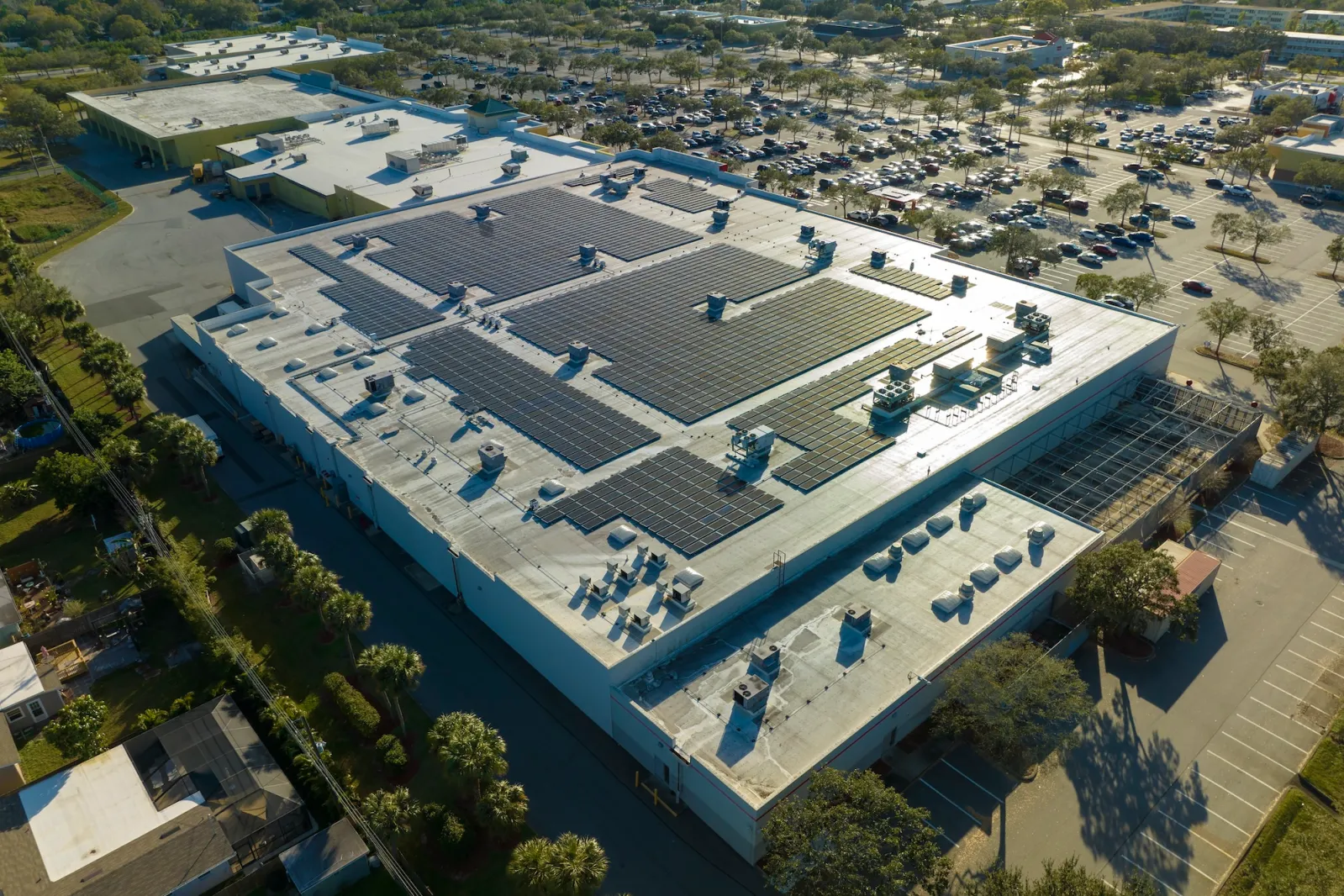
Commercial roof scope, inspection, access planning, and documentation for commercial real estate and reits.
Delaware Statutory Trust sponsors acquiring commercial properties in San Francisco operate in one of the most technically demanding real estate markets in the country. The combination of dense urban construction, California seismic requirements, a persistent marine climate, and the specific challenges of tech campus and mixed-use acquisitions creates a due diligence environment where roofing conditions can carry outsized financial implications. When a sponsor closes on a Mission District office conversion, a SoMa tech campus, or a Dogpatch industrial-to-creative redevelopment through a DST structure, the offering memorandum must reflect roofing capital reserves that are grounded in actual San Francisco construction economics - not national benchmark figures that understate the true cost of getting work done in this city. Remote sponsors need a local commercial roofing partner who understands both the technical complexity and the cost realities of the San Francisco market.
The 1031 exchange clock runs without accommodation for San Francisco's notoriously complex permitting environment. When a sponsor has 45 days to identify a replacement property and 180 days to close, roofing due diligence must be completed quickly enough to inform the decision - not delivered two weeks after the identification deadline has passed. Our San Francisco commercial roofing team has structured its inspection and reporting workflow around these timing constraints. We can schedule an inspection within 24 to 48 hours of engagement and deliver a condition report with thermal imaging documentation, remaining-life estimates, and capital cost projections within two to three business days. Securities attorneys and equity placement agents who have worked with us know that our reports are formatted to satisfy underwriting requirements on the first submission, reducing back-and-forth at a stage where time is already compressed.
Seismic CAPEX reserves are a distinct line item in San Francisco DST offering memoranda, and roofing is inseparable from that conversation. The connection between a roof system and a building's lateral force-resisting assembly - parapets, coping, equipment curbs, mechanical anchorage - is a structural engineering issue that also happens to be a waterproofing issue. On older commercial buildings throughout San Francisco's SOMA, Financial District, and North Beach neighborhoods, parapet walls were constructed to standards that predate modern seismic requirements. When a roof system on one of these buildings reaches end of life and requires replacement, the permit process will likely trigger a seismic upgrade requirement for the parapet - adding a cost that must be funded from the capital reserve and that a poorly informed reserve model will not have anticipated. We identify these conditions during due diligence and quantify their cost implications so that offering memorandum reserves are funded to match reality.
Tech campus DST acquisitions in San Francisco present a roofing profile that differs from conventional office or industrial assets. Multi-story commercial buildings that have been converted to creative office or technology use often carry rooftop mechanical loads that were added piecemeal over years - HVAC equipment, communication infrastructure, generator exhausts, and energy systems that have created a penetration density far above what the original waterproofing design anticipated. Each penetration is a potential failure point, and in San Francisco's climate - where summer fog and winter storms alternate in delivering sustained moisture exposure - inadequately sealed penetrations are among the most common causes of envelope failures in commercial buildings. Our inspections document every penetration, assess the condition of each flashing and collar, and identify the deferred maintenance backlog that a new DST owner will be assuming.
The marine climate that defines San Francisco's weather pattern is both a constant and an underappreciated risk factor. The city's fog season, which extends from May through September, creates prolonged periods of high surface humidity that affect roof membrane seams, metal flashings, and caulked joints in ways that a spot visual inspection will not reveal. Thermal imaging performed during and after fog events can identify moisture trapped in insulation layers that would otherwise appear dry on the surface. We use thermal imaging as a standard component of our San Francisco commercial inspections, and we schedule inspections to take advantage of the temperature differentials that make moisture anomalies visible. This is not a standard practice for contractors unfamiliar with coastal California markets, but it is the minimum standard for responsible DST due diligence in this environment.
Reserve adequacy for San Francisco DST offerings must account for the full cost of doing commercial roofing work in one of the most expensive construction markets in the country. San Francisco labor rates, prevailing wage requirements, the logistics of rooftop crane access in dense urban settings, and the cost of compliance with the city's rigorous permitting requirements all push replacement costs well above national averages. Sponsors who use national benchmark data to populate their reserve schedules systematically understate the capital exposure their investors are assuming. Our reserve projections reflect current San Francisco-area labor and materials pricing, current permit cost assumptions, and the specific characteristics of the roof system being assessed.
Hold-period maintenance in the passive DST structure requires a pre-established service relationship that can function without on-site decision-makers. In San Francisco, where an emergency roof repair in a multi-story building may require permits, certified access equipment, and neighbor notification, the operational complexity is higher than in most markets. We work with DST sponsors before or at closing to establish documented maintenance programs, pre-authorized emergency response parameters, and the site access protocols necessary to respond rapidly when a problem develops. The goal is to make the passive management structure function smoothly in a city where roofing work is inherently complex, so that tenant relationships and distribution streams are protected throughout the hold period.
San Francisco's ongoing commercial real estate evolution - from traditional office to mixed-use, creative, and technology-oriented occupancies - means DST sponsors are often acquiring buildings that have had unusual tenants, unconventional modifications, and rooftop uses that were not anticipated in the original construction. Cannabis dispensaries, food and beverage operations, and manufacturing tenants have all left their marks on commercial buildings throughout the city in the form of modified ventilation, exhaust systems, and rooftop equipment that create unique waterproofing challenges. Our inspectors know what to look for in these situations and provide the detailed findings that allow sponsors to make informed decisions before committing to an acquisition.
If you are a DST sponsor underwriting a San Francisco commercial property or managing an existing DST asset through its hold period, contact our team today. We work on 1031 timelines, understand California's regulatory environment, and have the local knowledge to provide due diligence reports that protect your investors and your offering. Send us the property address and your closing timeline and we will be on site within 48 hours.
Request A Roof Scope
Send the building location, roof concern, and access notes. We will respond with the next practical step.
Related Pages
Questions About DST Roofing Services
What changes the scope?
Access, wet insulation, deck repairs, edge metal, drain work, occupied-building constraints, disposal, and code documentation can all change the final path.
Can the building stay occupied?
Often, yes. The scope still needs rules for loading, noise, odors, tenant notices, daily dry-in, and emergency contact responsibilities.
When is coating realistic?
A coating is realistic only when the roof is dry, cleanable, compatible, properly detailed, and still structurally sound.
What should ownership receive?
A usable roof file should include photos, observed conditions, assumptions, near-term repairs, capital triggers, and the recommended next step.